Every home needs working smoke alarms, but the choice has grown far beyond a basic battery unit on the ceiling. A smart smoke alarm can warn you on your phone, tell you where the danger is and connect with the rest of your home. With so many options on the shelf, it helps to know which features genuinely improve safety and which are simply nice extras.
Start with what it detects
Smoke is only one threat. Carbon Monoxide is colourless and odourless, so you cannot rely on your senses to notice it. A combined smoke and Carbon Monoxide alarm covers both risks with a single device on the ceiling, which means fewer units to buy, mount and test. Some models go further and monitor temperature, humidity, air quality and motion, giving you a broader picture of what is happening at home while you are away.
Decide between hardwired and battery power
Battery-only alarms are easy to install, but they depend on you replacing or recharging batteries on time. Hardwired alarms draw power from your home’s electrical system and usually include a backup battery, so they keep working during a power outage. If your home already has wired alarms, a hardwired smart model is often the simplest upgrade. Mains wiring should always be handled by a qualified electrician.
Look for clear, layered alerts
A loud siren is essential, but the best smart alarms add context. Spoken voice alerts tell you whether the problem is smoke or Carbon Monoxide, and app notifications reach you when you are at work, travelling or asleep in another part of the house. Look for alarms that let you check status, silence nuisance alerts and review past events from your phone.
Check smart home compatibility
If you already use a smart home platform, make sure the alarm fits into it. Matter certification is worth looking for because it allows one device to work across several ecosystems. Apple users often search for a HomeKit smoke detector that shows up in the Home app alongside lights, locks and thermostats. Compatibility with Google Home, Amazon Alexa, Samsung SmartThings, Home Assistant or IFTTT opens the door to useful automations, such as turning on lights or shutting off a furnace fan when an alarm sounds.
Consider interconnection
When one alarm sounds, every alarm in the home should sound too. Interconnected alarms give everyone more time to react, especially in larger or multi-storey homes where a fire in the basement may not be heard upstairs. Check whether a smart alarm can link wirelessly, through a physical interconnect wire, or both, and confirm it is compatible with any alarms you plan to keep.
Think about design and daily living
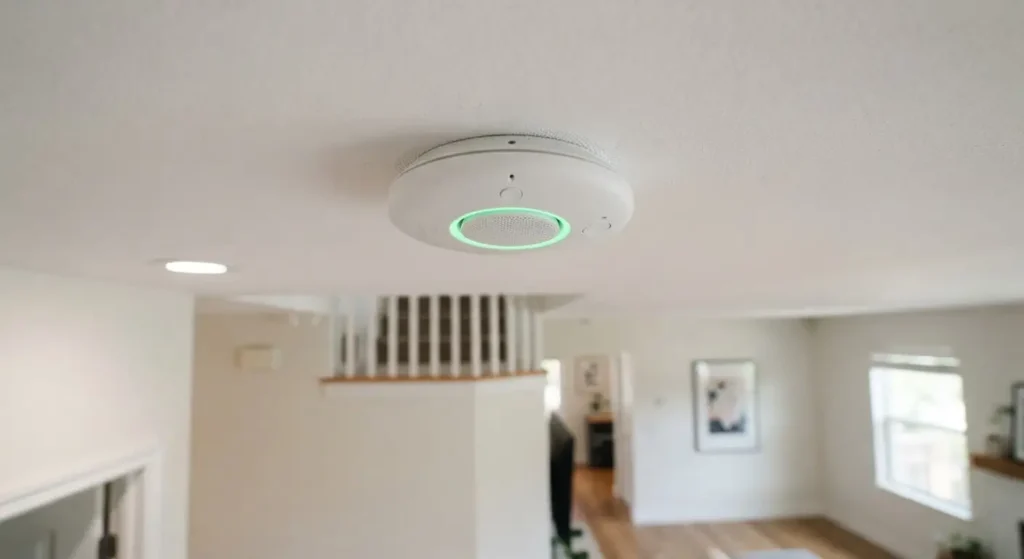
An alarm stays on your ceiling for years, so appearance matters more than many people expect. A clean design in a finish that suits your rooms makes it easier to install units everywhere they are needed rather than leaving gaps. Quiet status lights, simple app controls and easy testing all make it more likely that your household keeps the system maintained.
Questions to ask before you buy
- Does it detect both smoke and Carbon Monoxide?
- Is it hardwired with a backup battery, or battery-only?
- Does it work with the smart home platform you already use?
- Can it interconnect with your other alarms?
- What warranty and support come with it?
The best smart smoke alarm is the one that matches your home’s wiring, your devices and the way your family lives. Taking a few minutes to compare these features now means better protection for years to come.