When planning a solar power system, one of the most important factors to consider is whether you have single-phase or 3-phase power. These 2 types of power operate a little differently from each other and impact everything from which inverters you can use to your system’s performance and options for expansion. Keep reading to learn more about single-phase and 3-phase power, and what the differences are between them.
The Basics of Power Phases
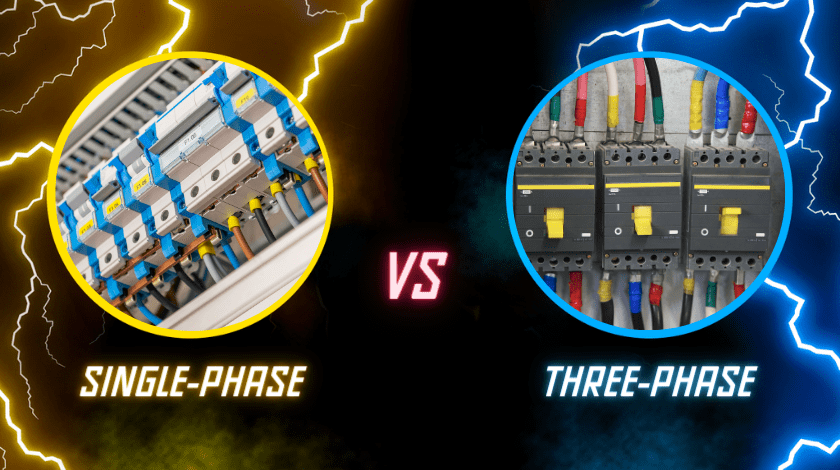
First, it’s important to understand what these different phases are when it comes to power. Single-phase power is the most common type of electrical service for residential homes. It delivers electricity through 2 wires—a phase wire and a neutral wire. Power arrives in a single, smooth, alternating wave, which is sufficient for most household appliances, electronics, and lights. Because it’s simpler and less expensive to install, utility companies typically supply single-phase power to neighborhoods where there isn’t much demand for very high power surges.
Three-phase power, on the other hand, is more commonly found in commercial buildings, industrial facilities, and some very large homes or rural properties. This kind of setup uses 3 alternating currents that reach peak voltage at different times. As a result, 3-phase power gives a more constant and reliable flow of power. This makes it ideal for heavy-duty loads like large motors, machines, commercial HVAC systems, and so on.
Key Differences
The biggest difference between single-phase and 3-phase power is how smoothly and consistently they deliver power. Single-phase systems have more noticeable dips and peaks in voltage, which can limit how many large appliances you can run simultaneously. (Ever had your lights dim slightly when your dryer kicks on? That’s a result of single-phase power.) By comparison, 3-phase systems deliver a more even electrical load, giving higher capacity, better efficiency, and improved stability with heavy loads.
Another big difference is the cost. Three-phase service usually needs more complex infrastructure and can be a lot more expensive to install as a result. However, for properties with large electrical demands, the increased reliability and performance might justify the higher price tag.
Choosing the Right Inverter
Choosing an inverter that matches your power supply is important for both safety and performance. Inverters are engineered to work with either single-phase or 3-phase power—and they’re not interchangeable. In fact, installing the wrong type can lead to poor performance, system faults, or even damage to your equipment.
If you have 3-phase power, it’s essential that you get Fronius three-phase inverters that are designed to handle that type of power supply.