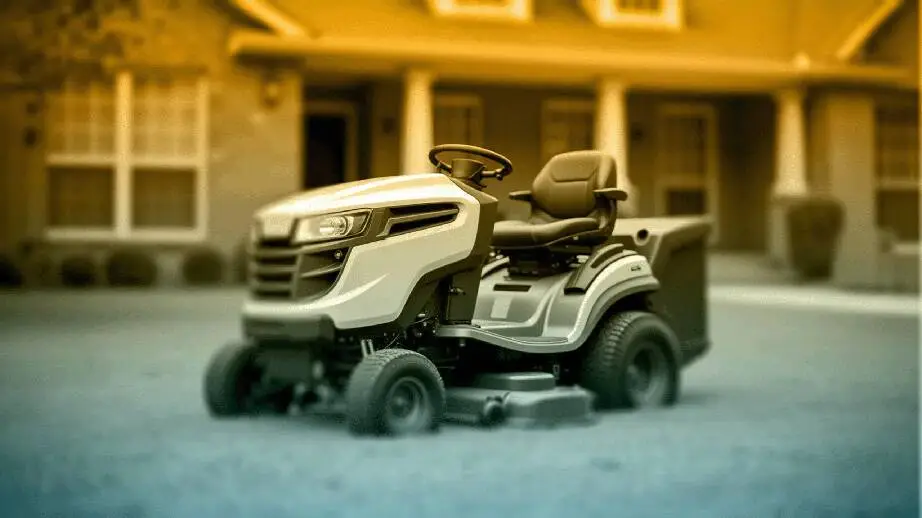
For decades, the rhythmic roar of a gas engine was the soundtrack of Saturday mornings in American suburbs. But the landscape is shifting. As battery technology leaps forward, many homeowners are weighing a significant financial decision: stick with the tried-and-true internal combustion engine or make the switch to electric.
When you look at the sticker price, gas-powered tractors often seem like the bargain. However, a savvy homeowner knows that the purchase price is only the first chapter of the story. To find out which machine actually leaves more cash in your wallet, we have to look at the “total cost of ownership” over five to ten years.
Investing in a high-quality electric riding mower can fundamentally change your seasonal budget. While the upfront investment is higher, the elimination of fuel costs and complex engine maintenance often tips the scales in favor of battery power faster than most people realize.
The Upfront Investment: Crossing the Price Gap
It is no secret that electric models carry a premium. On average, you can expect to pay anywhere from $1,000 to $2,500 more for a lithium-ion powered rider compared to a similar-sized gas counterpart.
This price gap exists primarily because of the battery cells. High-capacity lithium-ion batteries are expensive to manufacture, but they serve as your “pre-paid fuel” for the next several years. When buying gas, you are essentially financing your fuel costs week by week. With electric, you are paying for your “fuel” upfront.
Fuel vs. Electricity: The Weekly Savings
This is where the electric riding mower begins to claw back its lead. The cost to fully charge a riding mower battery is typically measured in cents, not dollars.
Consider this: a standard gas mower might consume a gallon of gas per hour. At $3.50 per gallon, mowing a large property 30 times a year adds up quickly. In contrast, charging a 60V or 80V battery system to handle that same acreage might cost less than $0.50 per charge depending on your local utility rates. Over a five-year period, the fuel savings alone can easily exceed $500 to $800.
The Hidden Cost of Maintenance
If you’ve owned a gas mower, you know the drill. Every spring involves a ritual: changing the oil, replacing spark plugs, swapping air filters, and treating fuel so it doesn’t gum up the carburetor over winter.
Electric mowers eliminate almost all of these “moving part” headaches. There are no belts to snap, no oil to spill on your garage floor, and no carburetors to clean.
- Gas Maintenance: ~$100–$150/year (Oil, filters, plugs, professional tune-ups).
- Electric Maintenance: ~$20/year (Blade sharpening and cleaning).
Lifespan and Battery Replacement
The “elephant in the room” for electric equipment is battery degradation. A well-maintained gas engine can last 15 years, though it will likely require significant repairs in its twilight years.
Modern lithium-ion batteries are generally rated for 500 to 1,000 full charge cycles. For the average homeowner, this translates to roughly 8 to 10 years of use before the battery capacity drops significantly. While a replacement battery pack is a major expense, the lack of engine repairs during those ten years often offsets the eventual cost of a new battery.
Total Cost of Ownership: A 5-Year Breakdown
To see the real winner, let’s look at a hypothetical 5-year comparison for a 1-acre lot:
| Expense Category | Traditional Gas Mower | Electric Riding Mower |
| Initial Purchase | $2,800 | $4,500 |
| Fuel/Electricity | $600 | $60 |
| Routine Maintenance | $500 | $100 |
| Repairs/Belts/Filters | $300 | $0 |
| Total 5-Year Cost | $4,200 | $4,660 |
By year seven or eight, the electric mower usually becomes the cheaper option. If gas prices spike or if you do your own blade sharpening, the “break-even” point happens even sooner.
Performance and Productivity: Time is Money
Value isn’t just about dollars; it’s about time. Traditional mowers require trips to the gas station with heavy cans that often spill in your trunk. They require “warm-up” periods and occasional troubleshooting when the engine won’t turn over.
Electric mowers offer “instant-on” capability. You push a button and you are mowing. Furthermore, the noise reduction is substantial. Because they are so much quieter, you can mow earlier in the morning or later in the evening without bothering neighbors, giving you more flexibility in your schedule.
Common Mistakes When Switching to Electric
Many homeowners jump into the electric market without doing their homework, leading to “buyer’s remorse” or unnecessary spending.
- Underestimating Acreage: Don’t buy a mower rated for 1 acre if you have 1.5 acres. Running a battery to 0% every time shortens its lifespan.
- Ignoring the Battery Ecosystem: If you already own handheld tools (blowers, trimmers) from a specific brand, staying within that “battery family” can save you hundreds on spare batteries.
- Poor Winter Storage: Leaving a lithium battery in a freezing garage at 0% charge can permanently damage the cells. Always store them with a partial charge in a climate-controlled area.
Best Practices for Maximizing Your Investment
To ensure your electric mower saves you the maximum amount of money, follow these pro tips:
- Keep Blades Sharp: Dull blades tear grass instead of cutting it, which puts more strain on the motors and drains the battery faster.
- Mow Regularly: Cutting extremely tall, thick grass consumes significantly more power. Keeping a consistent schedule preserves battery life.
- Clean the Deck: Grass buildup underneath the mower creates drag. Scrape the deck clean to keep the motors running efficiently.
Which One Should You Choose?
Choose Traditional Gas If:
- You have more than 3 acres of land.
- You have a very tight initial budget and cannot afford the upfront premium.
- You enjoy mechanical tinkering and DIY engine repair.
Choose Electric If:
- You have 2 acres or less.
- You want to eliminate the chore of buying and storing gasoline.
- You prefer a low-noise, zero-emission experience.
- You plan on staying in your home for at least 5–7 years to see the ROI.
Final Verdict: Does Electric Actually Save Money?
If you look at a window of 7 to 10 years, yes, an electric riding mower typically saves money. The combination of zero fuel costs, minimal mechanical maintenance, and the rising cost of gasoline makes battery power the smarter long-term financial play for the modern suburban homeowner. While the “entry fee” is higher, the peace of mind and monthly savings are undeniable.
Frequently Asked Questions (FAQ)
1. How long does the battery last on a single charge?
Most mid-range electric riding mowers are designed to handle 1 to 2 acres per charge, which usually equates to about 60 to 90 minutes of continuous cutting time. Higher-end models with expanded battery banks can last up to 4 acres.
2. Can I replace the batteries myself when they eventually die?
Yes. Most modern electric mowers use modular battery systems. While the battery packs are heavy and expensive, they are designed to be “plug-and-play,” meaning you won’t need a mechanic to swap them out.
3. Is an electric mower powerful enough for tall grass?
Absolutely. Electric motors actually produce “instant torque,” which can sometimes outperform gas engines in thick patches. However, consistently cutting very tall grass will drain the battery significantly faster than maintaining a standard lawn height.
4. Are electric mowers waterproof?
They are water-resistant, meaning you can mow damp grass and a light drizzle won’t hurt them. However, you should never store them outside in the rain or use a high-pressure power washer to clean the battery compartment or electronic displays.