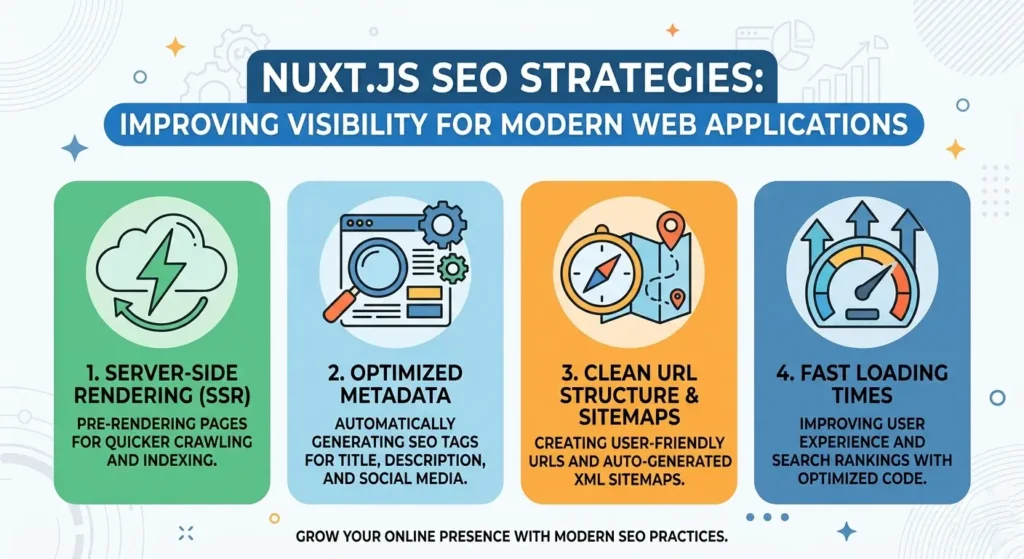
High-performing web applications are no longer just about functionality. They also need to be discoverable. Applying Nuxt.Js SEO strategies helps improve search visibility, enhance user experience, and drive steady organic traffic. With modern frameworks, server-side rendering and optimized routing have become important for better indexing and quicker page delivery.
Adopting the right Nuxt.Js SEO Strategies allows organizations to align technical performance with search engine requirements, ensuring that applications are both user-friendly and search-friendly.
SEO Optimization for Nuxt.js Applications
Search engines prioritize speed, structure, and accessibility. Applications that fail to meet these expectations often struggle to rank effectively.
Server-Side Rendering Advantage
Nuxt.js uses server-side rendering, where content is rendered before loading in the browser. This helps search engines crawl and index pages more easily than client-side rendering.
Faster Load Times
Optimized rendering reduces load time, improving user engagement and reducing bounce rates.
Structured Routing
Nuxt.js provides clean and predictable routing, which improves URL structure and enhances crawlability.
Teams working with Nuxt js Development Services can leverage these capabilities to build applications that align with modern SEO expectations.
Improving SEO in Nuxt.js Applications
Search engine bots rely on properly structured content to understand and rank pages.
Improve Metadata and Head Tags
Each page should have unique meta titles and descriptions. Nuxt’s head management helps set dynamic and relevant metadata for every route.
Enable Clean URL Structures
Readable and keyword-relevant URLs improve both user experience and search engine understanding.
Manage Robots and Sitemap
Generating a sitemap and configuring robots.txt helps search engines navigate the application efficiently.
These steps form the foundation of effective SEO optimization for Nuxt.js applications.
Performance Optimization for Better Search Rankings
Performance plays a direct role in search rankings and user experience.
Optimize Page Speed
Minimize unnecessary scripts, compress assets, and use efficient caching strategies to improve loading time.
Use Lazy Loading
Load images and components only when needed to reduce initial page load.
Reduce JavaScript Overhead
Keeping bundles lightweight improves rendering speed and overall performance.
Applications that focus on performance naturally align with search engine ranking factors.
Structuring Content for Search Engine Visibility
Well-structured content improves readability and search visibility.
Use Semantic HTML
Proper use of headings and semantic tags helps search engines understand content hierarchy.
Maintain Contextual Internal Linking
Linking relevant pages improves navigation and distributes page authority effectively.
Align Content with Search Intent
Content should directly answer user queries and provide clear, useful information rather than targeting keywords alone.
These practices ensure that content remains both user-centric and search-friendly.
Handling Dynamic Pages and Indexing in Nuxt.js
Handling dynamic pages correctly is critical for maintaining SEO performance.
Pre-render Important Pages
Static generation ensures that key pages are indexed quickly and efficiently.
Avoid Duplicate Content
Ensure each page has unique content and metadata to prevent indexing issues.
Manage Pagination Strategically
Use proper linking strategies to maintain crawlability across paginated content.
These techniques help maintain consistency and improve visibility across dynamic applications.
Technical SEO Implementation in Nuxt.js
Technical implementation plays a major role in SEO success.
Implement Structured Data
Adding schema markup improves how search engines interpret and display content.
Ensure Mobile Responsiveness
Responsive design is essential for both user experience and search rankings.
Secure the Application
Using HTTPS builds trust and aligns with search engine requirements.
Organizations leveraging vue js application development services can integrate these technical practices seamlessly into their applications.
Common SEO Challenges in Nuxt.js Projects
Even with a strong framework, certain challenges can impact performance.
Incorrect Rendering Configuration
Improper SSR or static generation setup can affect indexing and visibility.
Missing or Weak Metadata
Pages without optimized meta tags may struggle to rank effectively.
Performance Bottlenecks
Heavy assets and inefficient code can slow down applications and affect rankings.
Addressing these challenges early ensures long-term SEO success.
Best Practices for Long-Term SEO Growth
A consistent approach helps maintain and improve rankings over time.
Regularly Update Content
Fresh and relevant content signals activity and improves engagement.
Monitor Technical Performance
Track page speed, indexing status, and crawl errors to identify issues early.
Integrate SEO into Development
SEO should be part of the development process, not an afterthought.
These practices help maintain long-term visibility and performance.
Conclusion
Nuxt.Js SEO strategies play an important role in helping the modern web applications achieve both visibility and performance. By using server-side rendering, well-structured content, and strong technical implementation, businesses can create applications that are easier to discover and navigate.
A well-executed approach goes beyond basic optimization. It delivers fast, accessible, and meaningful experiences that match both user expectations and search engine requirements. As competition for visibility continues to grow, investing in well-planned and technically strong SEO practices becomes essential for long term digital success.