Introduction to Liveness Detection.
Fraudsters are becoming more advanced as digital identity checks become the key to banking, fintech, healthcare, and online services. Photos, videos, and deepfakes are now scenarios where spoofing can no longer be prevented by any means of a static identity check. In this case, liveness detection becomes very important. Liveness detection is a biometric security device, which is used to ensure that a genuine, living human being is present at authentication stage instead of a fake person.
Liveness detection provides a layer of dynamism in biometric systems, which guarantee trust in online transactions as a way of onboarding in digital environments, remote authentication, and in high risk online transactions.
What Is Liveness Detection?
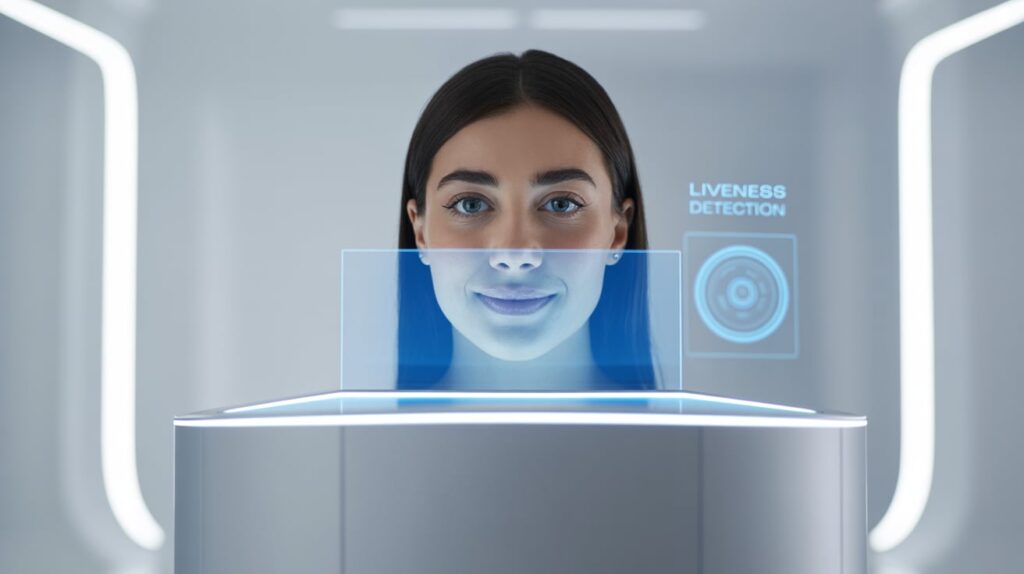
Liveness detection is a procedure applied in biometric systems to establish the identity of biometrics information or face that belongs to a living individual who is physically at the point of capture. It also does not allow attackers to circumvent facial recognition service with printed images, masks, pre-recorded videos, or the AI-generated deepfakes.
In comparison with the simple facial recognition that compares the facial features to the stored face image database, liveness detection evaluates movement, texture, depth, and behavioral biometrics to confirm that the human being is present.
The reasons why Liveness Detection Is Necessary Today.
This trend has exposed more individuals to fraud of identity as a result of the rapid expansion of remote services. Criminals have now been using AI to produce extremely real identities. In the absence of Liveness detection, organizations may suffer account hijackings, monetary losses, financial fines, and a damaged reputation.
Liveness detection is a technology that secures the business since only the real users will access sensitive services. It further assists organizations meet international KYC, AML and data protection requirements which require more rigorous customer identity checks.
The operation of Liveness Detection.
Liveness detection systems apply high-tech AI and machine learning algorithms to determine the validity of a biometric input. The system uses the multiple signals in the capture process including the facial movement, eye behavior, skin texture and depth perception.
The modern solutions tend to be passive i.e. users do not have to do certain things. The system is capable of detecting some subtle symptoms such as micro-expressions, light reflection and natural facial movements. This is the better method to enhance user experience and at the same time ensure high security.
Active vs Passive Liveness Detection.
There are normally two types of liveness detection namely, active and passive.
In active liveness detection, users must execute some actions, including blinking, smiling, or turning their head. Although it is effective, this strategy may be intrusive and impact the conversion rates.
Passive liveness detector operates in the background and does not need any interaction with the user. It uses biometric signals in real time, which is more resistant to fraud, as well as an easier onboarding experience. Passive liveness detection is becoming a popular choice of modern digital platforms due to its scalability and usability.
Widely used Liveness Attacks.
The level of awareness of the attack techniques makes the liveness detection significant. Photo attacks where people use printed or digital images, video replay attacks where people use screens, 3D mask attacks, and AI-based deepfake videos are the most widespread spoofing attacks.
High-end liveness detection systems are conditioned to counter such attacks through detection of unnatural textures, absence of depth, non-uniform lighting, and abnormal motion patterns that are not part of human faces.
Important Applications of Liveness Detection.
The liveness detection has been employed in most sectors where identity trust is paramount. It wins digital onboarding, mobile banking access, and high-value transactions in the financial services. In cryptocurrency and financial technology, it eliminates fake identities and account hijacking.
Liveness detection by healthcare providers is aimed at safeguarding patient data and allowing secure telemedicine. It is the cornerstone of e-commerce and marketplaces to minimize fraud and in digital ID programs, border control and e-governance systems by governments.
Liveness Detection Advantages to Businesses.
The introduction of liveness detection would drastically decrease losses due to fraud and enhance confidence in online services. It enhances biometric security but does not create friction to the user, resulting in an increased conversion rate in the onboarding process.
Compliance wise, liveness detection assists in regulatory needs such as identity verification, data protection and risk management. It is also used to make organizations future-proof their security infrastructure to meet changing AI-driven threats.
Deepfake Prevention and Liveness Detection.
Deepfake fraud has become a major menace with the emergence of generative AI. Liveness detection is used as a first line of defense since it detects inconsistencies in facial dynamics and in real-life physics that can not be completely replicated by AI-generated content.
With the advancement of deepfake technology, the systems of liveness detection solution are constantly being trained with the new attack data, which guarantees their security against the threats of the future.
The Future of Liveness Detection.
Continuous innovation is the key to the future of liveness detection. The development of AI and computer vision, as well as behavioral biometrics, are turning systems into more accurate, fast, and difficult to defeat. The multimodal biometrics, including voice and behavioural patterns will be further integrated to improve security.
Liveness detection will continue to be an essential part of fraud prevention in securing users, businesses, and ecosystems as digital identity will form the basis of online trust.
Conclusion
The use of liveness detection is no longer a choice in contemporary digital security. It is a crucial technology that makes biometric systems to communicate with real human beings and not a fake copy. Liveness detection establishes trust in AI-driven analysis, minimizes fraud, and facilitates digital transformation with reduced risks to industries through the inclusion of convenient user experiences.