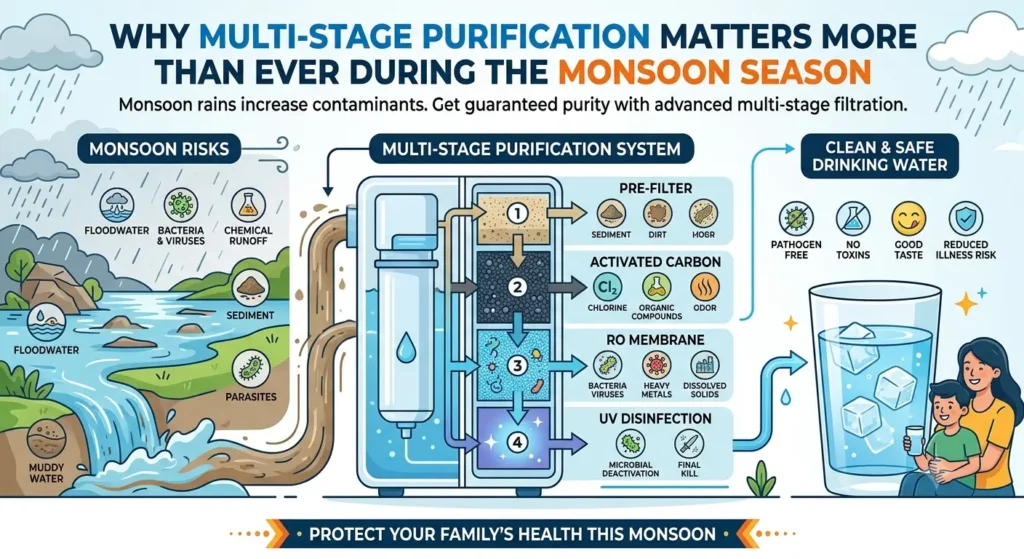
The monsoon season brings much-needed relief from the heat and replenishes water resources. However, it also increases the risk of water contamination. Heavy rainfall can wash pollutants, sediments, microorganisms, and harmful chemicals into lakes, rivers, reservoirs, and groundwater sources. As a result, the quality of water reaching households may deteriorate significantly during this period. This is why water purifiers with multi-stage purification are important during the monsoon season, helping ensure that drinking water remains safe, clean, and healthy.
How Monsoon Affects Water Quality
During periods of heavy rainfall, surface runoff carries mud, sediments, organic matter, pesticides, industrial pollutants, and microorganisms into water bodies. Ageing pipelines and water distribution systems may also become vulnerable to contamination due to leaks or waterlogging.
As a result, water supplied to homes may contain the following:
- Increased levels of suspended particles
- Harmful bacteria and viruses
- Dissolved impurities and chemicals
- Unpleasant odours and tastes
- Higher turbidity and discolouration
Even if the water appears clear, invisible contaminants may still be present, making proper purification essential.
What Is Multi-Stage Purification?
Multi-stage purification refers to a process where water passes through several filtration and treatment stages, with each stage targeting specific impurities. Instead of relying on a single filtration method, multiple technologies work together to improve overall water quality and safety.
Common purification stages may include:
- Sediment filtration to remove dirt, sand, and larger particles
- Activated carbon filtration to reduce chlorine, odours, and organic compounds
- RO (Reverse Osmosis) membranes to remove dissolved salts and heavy metals
- UV purification to neutralise bacteria and viruses
- UF (Ultrafiltration) membranes for additional microbial protection
The combination of these stages helps address a wider range of contaminants than any single technology alone.
Better Protection Against Seasonal Contaminants
One of the biggest advantages of multi-stage purification during the monsoon is its ability to tackle multiple water quality issues simultaneously.
For example, sediment filters can remove the increased dirt and turbidity caused by rainfall, while activated carbon filters help improve taste and smell. RO water purifiers address dissolved impurities, and UV or UF systems provide protection against disease-causing microorganisms that may enter water sources during flooding or waterlogging events.
This layered approach creates multiple barriers against contamination, reducing the likelihood of unsafe drinking water reaching your glass.
Improved Water Taste and Clarity
Monsoon-related contamination often affects the appearance and taste of water. Excess organic matter, chlorine adjustments by municipal authorities, and changing water conditions can create noticeable differences in flavour and odour.
Multi-stage purification helps restore water clarity while removing many substances responsible for unpleasant tastes and smells. As a result, drinking water becomes more appealing, encouraging better hydration for the entire family.
Consistent Water Quality Throughout the Season
Water quality can fluctuate significantly during the rainy months. A water source that is relatively clean one day may experience increased contamination after heavy rainfall the next.
Multi-stage systems are designed to handle these variations more effectively by addressing different categories of impurities at each stage. This helps maintain more consistent water quality despite changing environmental conditions.
A Smarter Investment for Household Health
Waterborne diseases tend to become more common during the monsoon season. While no purification system can replace proper maintenance and safe handling practices, a well-maintained multi-stage purifier adds an important layer of protection for households.
Families with children, elderly members, or individuals with weakened immune systems may particularly benefit from enhanced purification capabilities during periods when water quality is less predictable.
Conclusion
The monsoon season brings unique water quality challenges that often go unnoticed until problems arise. Increased sediment, microbial contamination, dissolved pollutants, and fluctuating water conditions can all impact the safety of drinking water. Multi-stage purification addresses these concerns through a combination of filtration and purification technologies, providing broader protection than single-stage systems. As water quality becomes more unpredictable during the rainy months, investing in effective multi-stage purification can help ensure safer, cleaner, and better-tasting water for your home.