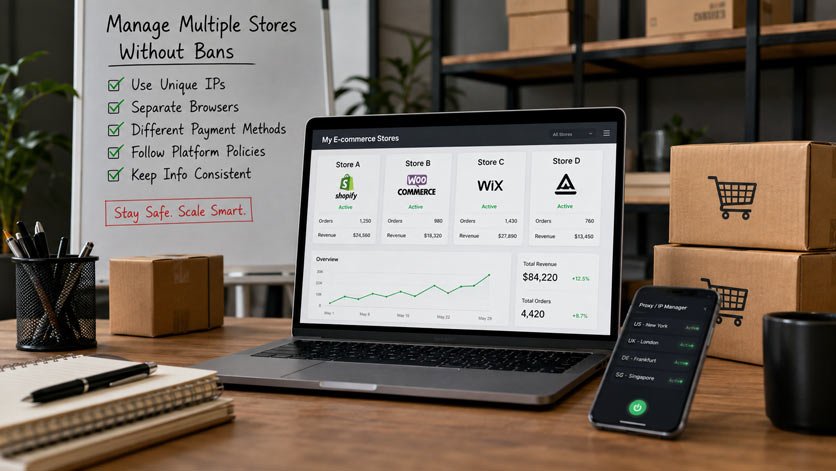
Modern e-commerce entrepreneurs, dropshippers, and retail brands frequently manage multiple storefronts across global marketplaces like Amazon, eBay, Etsy, and Shopify. Operating several accounts allows sellers to segment product categories, test localized pricing strategies, and protect revenue from sudden platform fluctuations. However, marketplace algorithms strictly enforce multi-accounting restrictions to prevent unauthorized merchant operations.
Online marketplaces deploy automated risk-scoring systems that continuously monitor account activity. If platform algorithms detect that separate merchant stores are managed from the same physical machine or network, the system flags the accounts. A minor compliance check on one storefront can instantly trigger a cascade suspension across all associated retail profiles, halting operations and freezing company revenue.
Why Basic Profile Switching Fails
Many sellers attempt to separate marketplace accounts using standard browser user profiles, incognito tabs, or routine cookie deletions. These methods do not provide real technical separation. Standard web browsers share core hardware metrics across all open windows and profiles. Marketplaces collect deep system telemetry, such as Canvas rendering outputs, WebGL parameters, audio processing latency, and installed font manifests.
When multiple merchant dashboards connect from the same hardware footprint, security algorithms identify a shared origin. Changing external IP addresses via a basic VPN does not break this connection, because the underlying hardware fingerprint remains identical. Preventing account linkage requires complete environment containerization.
Deploying Isolated Profiles for E-Commerce
To eliminate cross-store correlation, merchants must operate each storefront inside an independent virtual workspace. Using Noid allows sellers to build isolated profiles, each configured with an authentic, unique hardware signature. Every profile operates with separate cookie jars, isolated storage partitions, and independent system parameters.
Marketplace security filters evaluate each profile as a distinct physical computer connecting from a unique location. Pairing each profile with a dedicated static residential proxy ensures that geographic login histories remain consistent, preventing account linkage and protecting commercial assets from unexpected suspensions.
Workflow Optimization for Retail Teams
Dedicated multi-profile software offers essential structural advantages for growing e-commerce teams:
- Safe delegation of store management to virtual assistants without exposing primary login credentials.
- Isolated installation of marketplace research and repricing extensions within specific profiles.
- Locally encrypted profile backups to migrate workspaces across team devices securely.
Implementing strict profile separation provides e-commerce merchants with the operational stability needed to scale online retail operations safely.